Buy stream4u.eu ?
We are moving the project
stream4u.eu .
Are you interested in purchasing the domain
stream4u.eu ?
domain@kv-gmbh.de · 0541-91531010
Buy stream4u.eu ?
Is the word Chef or Direktor a loanword?
The word "Chef" is a loanword, as it comes from the French language where it means "chief" or "boss." It has been borrowed into English to refer to the head cook or executive chef in a kitchen. On the other hand, "Direktor" is not a loanword, as it is a German word that means "director" or "manager." Loanwords are words borrowed from another language and incorporated into the vocabulary of another language, while "Direktor" is a native German word. **
What is the difference between loanword and loan meaning?
A loanword is a word taken from one language and used in another language with little to no translation, while a loan meaning is when a word in one language adopts a new meaning from another language. Loanwords retain their original form, while loan meanings involve a shift in the meaning of a word. Both loanwords and loan meanings contribute to the enrichment and evolution of languages through cultural exchange and borrowing. **


Similar search terms for Loanword
Top-Angebote
Products related to Loanword:
-
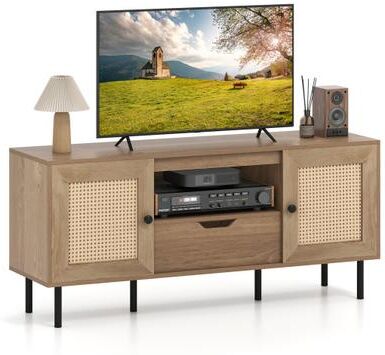
Costway Boho TV Stand for 60 Inch TV Entertainment Center with Cabinets and Storage Shelf-NaturalElevate your living space with this stylish media console, featuring a boho-inspired design and elegant PE rattan doors that resist fading, tearing, and unpleasant smells.109,99 $*Shipping: 0,00 $Secure redirect to the provider
-
Marlow Home Co. Highbridge 2 Door Entertainment TV Unit Grey 49"The Highbridge 2 Door TV Stand brings together classic Shaker-style charm and clever storage in one beautifully finished piece for the living room. Crafted with a soft dove-grey painted base and a warm oak-effect top, this TV unit strikes a lovely balance between country cottage character and contemporary practicality. Two panelled doors, complete with round brushed-metal knobs, open to reveal generous cupboard storage on either side, ideal for tucking away DVDs, games consoles, remote controls and all those living room bits and pieces you'd rather keep out of sight. Between the cupboards sits a central open section with a fixed shelf, giving you a tidy spot for a set-top box, games console or media player, while keeping the front panel free for infrared signals and easy access. Built to comfortably hold televisions of a good size along with your other entertainment kit, this piece suits a range of settings from snug lounges to more spacious family rooms. The combination of grey cabinetry and a natural wood-toned surface means it slots effortlessly into farmhouse, Scandinavian or modern country interiors, and pairs beautifully with soft furnishings, wicker baskets and greenery for that lived-in, homely feel. Sturdy construction underpins the whole design, so it stands up to daily use while still looking effortlessly stylish. Whether you're furnishing a new home or refreshing your existing living space, the Highbridge 2 Door TV Stand offers a practical, good-looking solution that keeps your media area organised and clutter-free. Brand Name: Marlow Home Co.. Colour: Grey79,99 £*Shipping: 0,00 £Secure redirect to the provider


-
What is a loanword and what is a long vowel?
A loanword is a word adopted from one language and incorporated into another language without translation. Loanwords often retain their original spelling and pronunciation. On the other hand, a long vowel is a vowel sound that is pronounced for an extended period of time compared to a short vowel. In English, long vowels are typically represented by a single vowel letter followed by a silent 'e' at the end of a word, such as in the word "cake." **
-
What is the difference between a foreign word and a loanword?
A foreign word is a word that comes from another language and is used in its original form without any adaptation or integration into the receiving language. A loanword, on the other hand, is a word that has been borrowed from another language and has been integrated into the receiving language, often with some modifications to fit the phonological, morphological, or syntactic patterns of the receiving language. In other words, a loanword is a foreign word that has been assimilated into the vocabulary of the receiving language. **
-
What is the difference between a loanword and a technical term?
A loanword is a word that has been borrowed from one language and incorporated into another language, often with some adaptation to fit the phonological and morphological patterns of the borrowing language. Loanwords often retain their original meaning and may be used in a variety of contexts. On the other hand, a technical term is a word or phrase that has a specific meaning within a particular field or discipline, such as science, technology, or medicine. Technical terms are often used to convey precise and specialized information within a specific context, and may not be widely understood outside of that context. While loanwords can come from any language and be used in a variety of contexts, technical terms are specific to certain fields and are used to convey specialized meanings within those fields. **
-
Does the word "Delusion" exist as a German loanword or only "Illusion"?
The word "Delusion" does exist as a German loanword, but it is not as commonly used as "Illusion." "Delusion" in German is "Täuschung," which can also be translated as "deception" or "misconception." While "Illusion" is more commonly used in both English and German, "Delusion" is still recognized as a loanword in the German language. **

What is the difference between a loanword, a foreign word, and a native word?
A loanword is a word taken from one language and used in another language with little to no translation. A foreign word is a word that originates from a different language but has been fully integrated into the vocabulary of the borrowing language. A native word is a word that is original to and commonly used in the language in which it is spoken. The key difference lies in the origin and level of integration of these words into the borrowing language. **
Does the Duden indicate whether a word is colloquial or a loanword or technical term?
Yes, the Duden does indicate whether a word is colloquial, a loanword, or a technical term. Each entry in the Duden dictionary includes information about the word's usage, including whether it is considered colloquial (informal language used in everyday conversation), a loanword (borrowed from another language), or a technical term (specific to a particular field or profession). This information helps users understand the context in which the word is typically used. **
Top-Angebote
Products related to Loanword:
-
GungHo Online Entertainment, Inc. Trails in the Sky 2nd Chapter for Nintendo Switch (Game Cartridge)Continue Estelle Bright's journey in Trails in the Sky 2nd Chapter, a story-driven Japanese role-playing game for Nintendo Switch. Following the events of the first chapter, Estelle sets out to find Joshua while uncovering a wider conspiracy threatening the Kingdom of Liberl. This game features a story-focused role-playing adventure set in the world of Liberl, where you can continue your journey from Trails in the Sky 1st Chapter and carry over clear data to unlock useful bonus items. The game also includes expanded combat with new Crafts, S-Crafts, and Brave Rush attacks, as well as an Orbment-based Arts system for customizing your party. Additional activities include fishing, poker, and cooking. This physical Nintendo Switch release contains the game on a retail cartridge, allowing you to play on the go. The game is rated PEGI 12 and is suitable for players aged 12 and above.51,09 £*Shipping: 0,00 £Secure redirect to the provider
-
Costway Boho TV Stand for 60 Inch TV Entertainment Center with Cabinets and Storage Shelf-NaturalElevate your living space with this stylish media console, featuring a boho-inspired design and elegant PE rattan doors that resist fading, tearing, and unpleasant smells.109,99 $*Shipping: 0,00 $Secure redirect to the provider
-
Is the word Chef or Direktor a loanword?
The word "Chef" is a loanword, as it comes from the French language where it means "chief" or "boss." It has been borrowed into English to refer to the head cook or executive chef in a kitchen. On the other hand, "Direktor" is not a loanword, as it is a German word that means "director" or "manager." Loanwords are words borrowed from another language and incorporated into the vocabulary of another language, while "Direktor" is a native German word. **
-
What is the difference between loanword and loan meaning?
A loanword is a word taken from one language and used in another language with little to no translation, while a loan meaning is when a word in one language adopts a new meaning from another language. Loanwords retain their original form, while loan meanings involve a shift in the meaning of a word. Both loanwords and loan meanings contribute to the enrichment and evolution of languages through cultural exchange and borrowing. **
-
What is a loanword and what is a long vowel?
A loanword is a word adopted from one language and incorporated into another language without translation. Loanwords often retain their original spelling and pronunciation. On the other hand, a long vowel is a vowel sound that is pronounced for an extended period of time compared to a short vowel. In English, long vowels are typically represented by a single vowel letter followed by a silent 'e' at the end of a word, such as in the word "cake." **
-
What is the difference between a foreign word and a loanword?
A foreign word is a word that comes from another language and is used in its original form without any adaptation or integration into the receiving language. A loanword, on the other hand, is a word that has been borrowed from another language and has been integrated into the receiving language, often with some modifications to fit the phonological, morphological, or syntactic patterns of the receiving language. In other words, a loanword is a foreign word that has been assimilated into the vocabulary of the receiving language. **
Similar search terms for Loanword
-
Marlow Home Co. Highbridge 2 Door Entertainment TV Unit Grey 49"The Highbridge 2 Door TV Stand brings together classic Shaker-style charm and clever storage in one beautifully finished piece for the living room. Crafted with a soft dove-grey painted base and a warm oak-effect top, this TV unit strikes a lovely balance between country cottage character and contemporary practicality. Two panelled doors, complete with round brushed-metal knobs, open to reveal generous cupboard storage on either side, ideal for tucking away DVDs, games consoles, remote controls and all those living room bits and pieces you'd rather keep out of sight. Between the cupboards sits a central open section with a fixed shelf, giving you a tidy spot for a set-top box, games console or media player, while keeping the front panel free for infrared signals and easy access. Built to comfortably hold televisions of a good size along with your other entertainment kit, this piece suits a range of settings from snug lounges to more spacious family rooms. The combination of grey cabinetry and a natural wood-toned surface means it slots effortlessly into farmhouse, Scandinavian or modern country interiors, and pairs beautifully with soft furnishings, wicker baskets and greenery for that lived-in, homely feel. Sturdy construction underpins the whole design, so it stands up to daily use while still looking effortlessly stylish. Whether you're furnishing a new home or refreshing your existing living space, the Highbridge 2 Door TV Stand offers a practical, good-looking solution that keeps your media area organised and clutter-free. Brand Name: Marlow Home Co.. Colour: Grey79,99 £*Shipping: 0,00 £Secure redirect to the provider
-
Timechee Large Entertainment Center Bookshelves 57x38 inch Hutch Space for TVAll-New Modern TV Stand Wall Unit - Adding a Touch of Luxury to Your Living(57x38 inch Hutch Space for TV) (The maximum option includes all products, while the rest of the options only have a single product.413,49 $*Shipping: 0,00 $Secure redirect to the provider
-
What is the difference between a loanword and a technical term?
A loanword is a word that has been borrowed from one language and incorporated into another language, often with some adaptation to fit the phonological and morphological patterns of the borrowing language. Loanwords often retain their original meaning and may be used in a variety of contexts. On the other hand, a technical term is a word or phrase that has a specific meaning within a particular field or discipline, such as science, technology, or medicine. Technical terms are often used to convey precise and specialized information within a specific context, and may not be widely understood outside of that context. While loanwords can come from any language and be used in a variety of contexts, technical terms are specific to certain fields and are used to convey specialized meanings within those fields. **
-
Does the word "Delusion" exist as a German loanword or only "Illusion"?
The word "Delusion" does exist as a German loanword, but it is not as commonly used as "Illusion." "Delusion" in German is "Täuschung," which can also be translated as "deception" or "misconception." While "Illusion" is more commonly used in both English and German, "Delusion" is still recognized as a loanword in the German language. **
-
What is the difference between a loanword, a foreign word, and a native word?
A loanword is a word taken from one language and used in another language with little to no translation. A foreign word is a word that originates from a different language but has been fully integrated into the vocabulary of the borrowing language. A native word is a word that is original to and commonly used in the language in which it is spoken. The key difference lies in the origin and level of integration of these words into the borrowing language. **
-
Does the Duden indicate whether a word is colloquial or a loanword or technical term?
Yes, the Duden does indicate whether a word is colloquial, a loanword, or a technical term. Each entry in the Duden dictionary includes information about the word's usage, including whether it is considered colloquial (informal language used in everyday conversation), a loanword (borrowed from another language), or a technical term (specific to a particular field or profession). This information helps users understand the context in which the word is typically used. **
* All prices are inclusive of VAT and, if applicable, plus shipping costs. The offer information is based on the details provided by the respective shop and is updated through automated processes. Real-time updates do not occur, so deviations can occur in individual cases. ** Note: Parts of this content were created by AI.